| | WEEKLY ISSUE 66 | May 29, 2026 |
|
|
|
|---|
|
Mitigate Risk. Lead with Clarity. |
|
|---|
|
IN THIS ISSUE
ALSO INCLUDED
|
|
|
|---|
|
PREVIOUSLY ISSUED EXECUTIVE ORDERS | For continued reference these are the EOs targeting DEI and LGBTQ+ protections that have been issued: We will continue to monitor activities that relate to these EOs either directly or indirectly. |
|
|
|---|
|
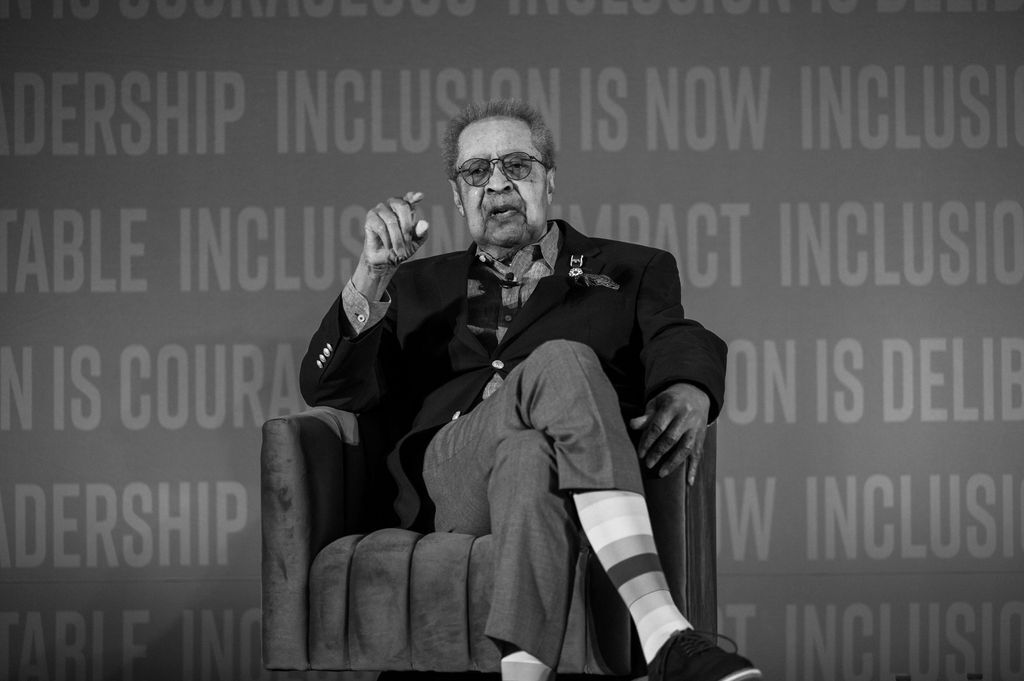
| | | | | | Dr. Clarence B. Jones, lawyer, speechwriter, civil rights activist, and trusted confidant to Dr. Martin Luther King Jr., died on May 22, 2026, in Cupertino, California. He was 95.
A member of Dr. King’s inner circle, Dr. Jones helped plan the March on Washington, smuggled the “Letter From Birmingham Jail” out of a Birmingham city jail, and co-drafted what became the “I Have a Dream” speech. He also served on the legal team that won New York Times v. Sullivan, the landmark Supreme Court ruling that protected press freedom and civil rights advocacy from retaliatory libel suits. In 2024, President Biden awarded him the Presidential Medal of Freedom.
At BRIDGE24, I had the extraordinary privilege of hosting Dr. Jones as our keynote speaker. At breakfast, he told me that BRIDGE had inherited the civil rights movement. I nervously laughed. It felt too sacred. Too big of a baton to hold.
But he was right.
Dr. Jones understood that civil rights was never simply about a moment in history. It was about the ongoing responsibility to protect freedom, expand opportunity, and confront silence in the face of injustice.
When asked about the enduring relevance of the “I Have a Dream” speech, he spoke not about nostalgia, but about accountability — urging the nation to live up to its highest ideals while reckoning honestly with its history.
At a moment when civil rights protections, DEI programs, academic freedom, press freedom, and even the interpretation of Title VII itself are increasingly under political and legal assault, his words feel even more urgent. Across the country, we are watching attempts to redefine equity as discrimination, restrict inclusion efforts through executive action and litigation, narrow enforcement priorities at agencies like the EEOC, and challenge long-standing civil rights frameworks that generations fought to secure.
Dr. Jones brought the full sweep of that history into focus. He reminded us how fragile freedom is, the responsibility we have to lift others, and that hate flourishes in silence. “The people who will change the nation are those who speak out, who refuse to be bystanders, who raise their voices against injustice,” he told us. “When we stand up to silence, we stand up to all hate.”
Dr. Jones was inspiring, irreverent, and irrefutable. And when he reluctantly rose from his chair to leave the stage and began singing “This Little Light of Mine,” he boldly challenged all of us to reach back and pull others up and “never ever ever ever ever never ever ever ever ever ever never ever ever give up!”
We stand on the shoulders of giants like Dr. Jones.
Let it shine. Let it shine. Let it shine. | | | | | |
|
|---|
|
FEDERAL FUNDING & OVERSIGHT |
|
|---|
| | | | | |
OVERVIEWOn May 26, 2026, a three-judge panel of the U.S. Court of Appeals for the Ninth Circuit partially upheld a federal district court injunction blocking the Trump administration from terminating certain federal research grants tied to diversity, equity, inclusion, accessibility, and environmental justice initiatives.
The case, Thakur v. Trump, was filed by University of California researchers whose federally funded grants from agencies including the Environmental Protection Agency (EPA), National Science Foundation (NSF), and National Endowment for the Humanities (NEH) were terminated pursuant to Executive Orders 14173 and 14151 and related agency directives implementing the administration’s anti-DEI executive orders.
The district court had provisionally certified two classes of researchers: those whose grants were allegedly terminated because of perceived DEI, DEIA, or environmental justice viewpoints, and those whose grants were terminated through generalized form letters without grant-specific explanations.
The Ninth Circuit upheld the injunction for the first class, holding that the plaintiffs were likely to succeed on their First Amendment claim because the record indicated agencies relied on keyword searches and internal directives to identify and terminate grants associated with DEI, DEIA, or environmental justice viewpoints. The court stated the evidence supported the plaintiffs’ claim of likely viewpoint discrimination prohibited by the First Amendment.
The case now returns to the district court for further proceedings.
LEGAL INTERPRETATIONThe Ninth Circuit’s ruling reinforces an important constitutional limitation on executive authority: while federal agencies retain broad discretion over grantmaking priorities, that discretion does not extend to terminating funding based on protected viewpoints or perceived ideological expression.
The court drew a distinction between the government’s ability to discontinue an entire subsidy program and its inability to selectively terminate individual grants because of the viewpoints associated with the funded work. According to the panel, the record supported the plaintiffs’ claim that agencies relied on keyword searches and internal directives to identify grants associated with DEI, DEIA, and environmental justice concepts for termination across multiple programs.
The court concluded the plaintiffs were likely to succeed on their First Amendment claim because the challenged actions appeared directed at suppressing disfavored viewpoints rather than implementing neutral funding criteria. The panel further noted that terms such as “DEI,” “DEIA,” and “environmental justice” reflect viewpoints rather than purely neutral subject matter classifications.
BRIDGE POVThe Ninth Circuit’s ruling represents one of the clearest judicial signals to date that anti-DEI enforcement efforts remain subject to constitutional limits. The panel drew a distinction between the government’s authority to change funding priorities and its inability to selectively target organizations because of viewpoints associated with DEI, DEIA, or environmental justice work.
For institutions across research, education, business, and the nonprofit sector, the decision reinforces that courts may scrutinize whether anti-DEI actions are being implemented as neutral policy changes or as mechanisms to suppress disfavored viewpoints. As legal challenges continue, constitutional protections involving speech, academic freedom, and institutional autonomy are becoming increasingly central to the DEI landscape.
ACTIONABLE STRATEGIESStrengthen Program Governance: Ensure grants, research initiatives, and enterprise programs are clearly tied to documented business, scientific, educational, or public-interest objectives supported by measurable outcomes. Prepare for Expanded Constitutional Challenges: Anti-DEI enforcement efforts are increasingly intersecting with First Amendment, academic freedom, and administrative law questions. Legal review should extend beyond traditional discrimination analysis alone. Maintain Operational Discipline: Institutions should continue advancing lawful inclusion and research initiatives while ensuring policies, funding decisions, and program administration are consistently documented, neutral in application, and legally defensible.
See also: "NIH Ordered to Restore Cancelled Grants Under Anti-DEI Certification Policy" (Issue 17); "Supreme Court Greenlights Cuts to DEI-Linked NIH Grants" (Issue 27); "Judge Blocks Trump-Era 'Pay-to-Stay-Funded' Settlement, Shields the University of California System From Funding Conditionality" (Issue 39); "NIH Restores Standard Grant Reviews Without DEI Criteria While Preserving Future Conditions" (Issue 46) | | | | | |
|
|---|
|
| | | | | |
On May 15, 2026, Judge Trina Thompson of the U.S. District Court for the Northern District of California granted final approval of a $110 million settlement in In re Wells Fargo & Co. Consolidated Derivative Shareholder Litigation.
The shareholder derivative lawsuit alleged Wells Fargo’s Board of Directors breached fiduciary duties in connection with discriminatory hiring and lending practices, including allegations that the bank approved fewer than 50% of Black homeowners’ refinancing applications in 2020 and conducted interviews with nonwhite job candidates that were not intended to result in employment offers in order to demonstrate progress toward internal diversity hiring goals.
Under the settlement, Wells Fargo will establish a $100 million Borrower Assistance Fund to provide mortgage assistance to low- and moderate-income borrowers in designated census tracts across the United States. An additional $10 million will be paid by insurers for the director defendants.
A separate proposed $85 million settlement involving the alleged sham interview practices remains pending final court approval. | | | | | |
|
|---|
|
| | | | | |
On May 7, 2026, U.S. District Judge Colleen McMahon of the Southern District of New York ruled that the Trump administration’s termination of more than 1,400 National Endowment for the Humanities grants in April 2025 was unlawful and unconstitutional. The court granted summary judgment in favor of plaintiffs including the American Council of Learned Societies, the American Historical Association, and the Modern Language Association of America.
The ruling found that the grant terminations violated the First Amendment and the equal protection component of the Fifth Amendment, and that the Department of Government Efficiency (DOGE) lacked statutory authority to cancel the grants. Judge McMahon permanently barred the administration from terminating the grants.
The court also criticized the government’s use of artificial intelligence tools, including ChatGPT-generated summaries and keyword searches, to identify grants associated with DEI concepts for elimination.
See also: Depositions Reveal AI-Driven Review Used to Terminate Federal DEI Grants (Issue 56); Underground Railroad Education Center Sues NEH Over Grant Cancellation (Issue 57) | | | | | |
|
|---|
|
| | | | | |
On May 26, 2026, the Department of Justice’s Civil Rights Division filed a lawsuit against UCLA in the U.S. District Court for the Central District of California alleging the university violated Title VI of the Civil Rights Act by acting with deliberate indifference toward alleged antisemitic discrimination against Jewish and Israeli students.
The complaint centers on UCLA’s response to a 2024 encampment outside Royce Hall, where demonstrators allegedly blocked Jewish and Israeli students from accessing portions of campus and academic buildings. The DOJ alleges university administrators were aware of the conduct but failed to take timely corrective action. The lawsuit also seeks the return of federal grant funding awarded during the alleged period of noncompliance.
The filing marks the second DOJ lawsuit against the University of California involving antisemitism in 2026. In February, the Justice Department filed a separate Title VII lawsuit alleging UCLA failed to prevent a hostile work environment for Jewish and Israeli employees.
UCLA Chancellor Julio Frenk rejected the allegations, stating the university has taken substantial steps to address antisemitism and calling the lawsuit’s premise “simply wrong.”
See also: Trump Administration Continues Targeted Enforcement of Title VI and Title IX (Issue 20); DOJ Finds UCLA and GWU Liable for Failing to Address Antisemitism (Issue 25); UC Unions Sue Trump Administration Over "Financial Coercion" (Issue 31); Civil Rights Commission Launches Oversight Inquiry into Government's Handling of Campus Antisemitism (Issue 34); Judge Blocks Trump-Era 'Pay-to-Stay-Funded' Settlement, Shields the University of California System From Funding Conditionality (Issue 39) | | | | | |
|
|---|
|
COMMUNITY EVENTS | BRIDGE invites everyone to join for our monthly Community Calls which take place on the last Thursday of every month, gathering DEI marketing, and business leaders committed to driving systemic change within our organizations and the industry at large. Our next call is Thursday, June 25th from 12-1p ET. | | |
|
|
|---|
ABOUT BRIDGE FORWARD | | | | | | | Led by BRIDGE, FORWARD is a weekly leadership briefing that distills the most consequential legal, political, and reputational developments shaping DEI and inclusive growth. Each issue provides legal interpretation, BRIDGE’s point of view, and actionable strategies to help leaders safeguard trust, anticipate risk and make credible value-based decisions in a volatile environment.
Who it’s for: CMOs, CCOs, Chief DEI Officers, GCs, Heads of Risk, CHROs, and senior leaders across DEI, marketing, brand, policy, and legal functions. FOR PAST ISSUES OF BRIDGE FORWARD WEEKLY GUIDANCE PLEASE VISIT HERE. *These BRIDGE FORWARD updates should not be construed as legal advice or counsel. They are for educational and instructive purposes only, to aid our understanding about how best to actively continue our mission in response to this moment. | | | | | |
|
|
|
|---|
 | |
|  | |
| |
|---|
|
|
|
|
|
|
|---|
|
| | 1276 Auto Park Way Suite D, PMB 183, Escondido, CA 92029 |
| This email was sent to {{ contact.EMAIL }} |
| You've received it because you've subscribed to our newsletter. |
| | |
|
|
|---|
|
|
|